This year, as Fello celebrates 65 years of supporting people with disabilities and building inclusive communities, we’re reflecting on the history of the disability rights movement and the milestones that helped shape the work we do today.
For decades, people with disabilities and their allies have worked to create a world where people can participate fully in their communities, make their own choices, and live with dignity and independence. Each decade has brought new progress—and new challenges.
The 2020s have continued that work, bringing greater attention to what inclusion looks like in everyday life. More people with disabilities are living in their communities, pursuing education and employment, building relationships, and finding new ways to belong. At the same time, the past several years have reminded us that this progress cannot be taken for granted.
Protecting the rights, freedoms, and respect of people with disabilities takes ongoing advocacy, new ideas, and a commitment to keep moving forward.
A Greater Sense of Belonging
By the 2020s, the disability rights movement had helped transform where and how people with disabilities live. Fewer than 16,000 people with disabilities lived in state-run institutions by 2021—a dramatic drop from nearly 500,000 in 1955.
But inclusion is more than where someone lives. It means having the opportunity to learn, work, build relationships, participate in the community, and make choices about your own life.
Those changes are increasingly visible in everyday life. People with disabilities are graduating from college, pursuing careers, living independently, and becoming active members of their communities. Representation is changing, too, as people with disabilities are increasingly recognized in entertainment, products, workplaces, and public life. In 2020, Pixar cast a person with a disability to voice a character with autism in the film Loop—a first for the studio. In 2026, Adidas released a running shoe designed specifically for athletes with Down syndrome. Moments like these show that the experiences of people with disabilities are finally being recognized and represented.
These moments may seem small compared with the landmark laws and court decisions that shaped earlier decades. But together, they reflect something important: the growing expectation that people with disabilities should be a part of every aspect of everyday life.
For Fello, that has always been at the heart of our work.
Throughout the 2020s, Fello has continued expanding the ways we support people with disabilities and their families. We launched new opportunities for community connection, expanded behavioral health support, and created new ways for people and families to access resources. Our volunteer program provides opportunities to connect, learn, and grow, while initiatives like Fello at The Mall make it easier for people to connect with support in their own communities.
Each new initiative has opened more doors and possibilities for belonging.
Responding to a Changing World
The decade began with a challenge no one anticipated.
On January 20, 2020, the U.S. confirmed its first COVID-19 case. Just two months later, the country faced the highest number of confirmed cases worldwide, and a nationwide shutdown quickly changed daily life for every American.
The COVID-19 pandemic disrupted daily life across the country and exposed barriers that people with disabilities had been navigating for years. Services, health care, social connection, and support all became harder to access.
Organizations like Fello quickly took action. Working with Anne Arundel County, Fello launched the COVID-19 Family In-Home Supports program, providing $500 respite grants to families of children with disabilities. The grants helped families access respite care and get much-needed relief during an uncertain and isolating time.
But the pandemic revealed needs that went beyond respite support. Isolation and uncertainty highlighted the importance of accessible, person-centered mental health care. In 2020, Fello began offering group mental health sessions, creating space for the people we support to connect and talk about what they were experiencing.
That work continued long after the immediate crisis passed. Today, Fello’s behavioral health program is available to the people we support, with plans to expand access to the broader disability community in Maryland.
The experience reinforced an important lesson: inclusion means responding to the whole person and to the changing needs of the community. Health is the foundation for independence, but it isn’t the whole picture. True inclusion also means having the opportunity to live, work, and connect where and how you choose.
Building More Inclusive Communities
As more people with disabilities became part of their communities, the idea of inclusion continued to grow. It wasn’t just about where people lived. It was about having the same opportunities as everyone else to build a life: a home, a livelihood, access to health care, and a place in the community.
That broader vision of inclusion shaped Fello’s work in the 2020s.
In 2024, Fello opened Port Street Commons in Easton, bringing beautiful, affordable housing to a changing Town of Easton and giving more people the opportunity to live in Easton and be part of the community they call home.
That same year, Fello launched Health Connection, bringing on-site primary and urgent care to Fello employees. The program’s success in its first year led Fello to expand Health Connection to include people supported through Fello’s Living Options & Services program.
Work has long been another important part of independence and community life. Across the country, opportunities for people with disabilities to pursue competitive, integrated employment have continued to grow, while the use of sheltered workshops and subminimum wages has declined.
In 2023, fewer than 46,000 people in the U.S. worked in sheltered workshops, down from more than 400,000 in 2012. The number of people with disabilities earning subminimum wages also fell significantly between 2018 and 2024.
Maryland has been part of that progress. In 2024, the state expanded the Employed Individuals with Disabilities Program, removing income restrictions and lowering the minimum eligibility age, while protecting access to Medicaid benefits.
Fello has been working toward that same goal for years. Through our workforce development program, we help people with disabilities find meaningful employment, build skills, and succeed on the job. Abby’s story is one example of what becomes possible when people have the opportunity and support to build careers on their own terms.
The work of inclusion has always been about opening doors. In the 2020s, more doors are opening—not just to services, but to homes, careers, health care, and communities.
A New Chapter
In 2025, we became Fello.
The new name reflected how much had changed since our founding 65 years earlier. What began as a small group of parents advocating for their children had grown into an organization serving people with disabilities and building stronger communities across Maryland.
But becoming Fello wasn’t about leaving our history behind. It was about carrying that history forward.
The disability rights movement has always evolved as people have challenged assumptions about what is possible, and Fello has done the same.
Today, we’re expanding our work beyond traditional services—building inclusive housing, creating new opportunities for connection and community, investing in employment and health care, and finding new ways to support people and families.
And increasingly, people with disabilities are helping shape that future themselves.
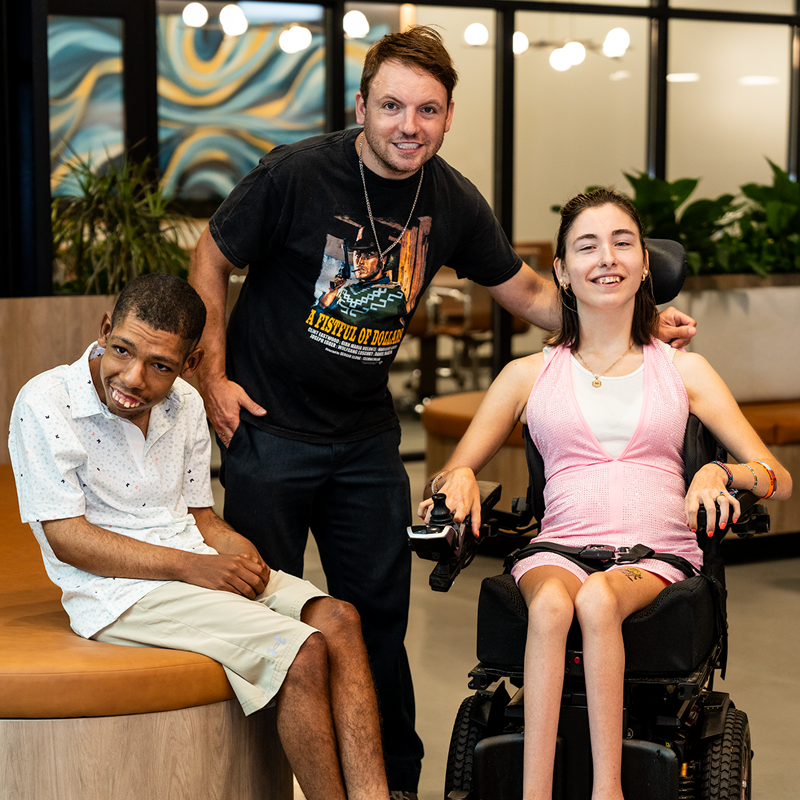
Living Boldly, Fello’s self-advocacy group founded and led by people with disabilities, gives members a place to build confidence, develop leadership skills, advocate for change, and use their voices in their communities.
Their work reflects one of the most important lessons of the disability rights movement: people with disabilities should not simply have a place in the conversation. They should help lead it.
The work that began more than six decades ago continues to change—and so does Fello. Sixty-five years have passed, but the movement is still moving forward. And there’s still more to make possible. Volunteer with us. Sign up for our Action Alerts. Support Maryland families in accessing critical therapies, services, and resources. Every action you take makes a difference.